
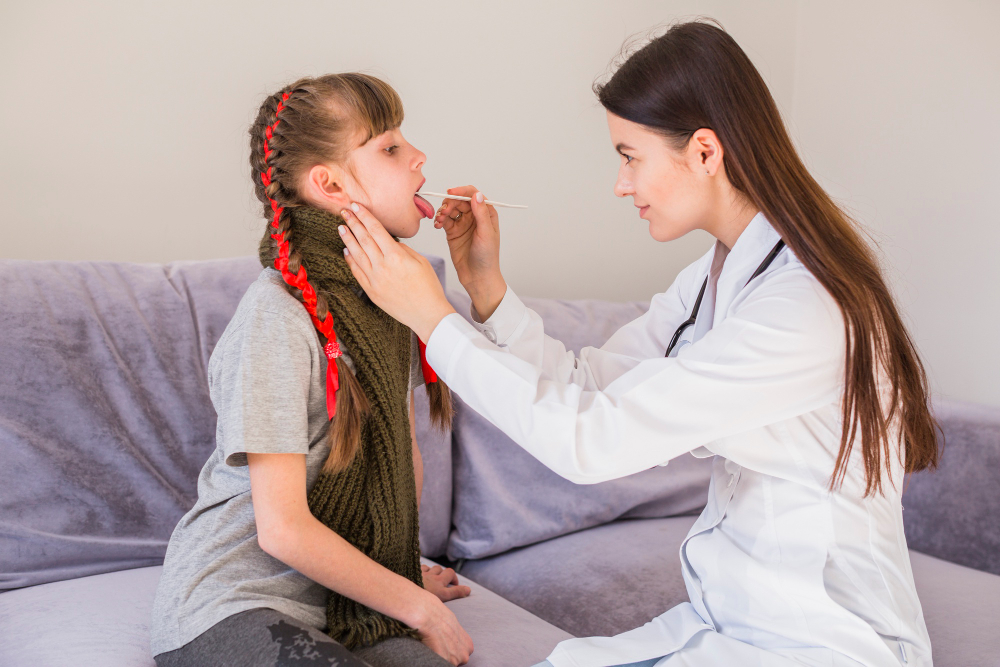
What Is a Pediatric Sore Throat?
A pediatric sore throat means pain or discomfort in a child’s throat. This is a common problem, especially in school-aged children. Often, a pediatric sore throat is mild and goes away on its own. However, sometimes it can signal a more serious illness. Because children may not always describe their pain well, parents should watch for signs and know when to seek help.
Common Symptoms in Children
Children with a sore throat may show different symptoms. Sometimes, these signs are easy to spot. Other times, they can be subtle. Here are some common symptoms:Throat pain or scratchinessDifficulty swallowingRed or swollen throatFeverSwollen neck glandsLoss of appetiteHoarse voiceCough or runny nose (in some cases)
Additionally, younger children may become fussy or refuse to eat. If your child has trouble breathing or drools a lot, seek help right away.
Main Causes of Sore Throat in Children
There are several causes of a pediatric sore throat. Knowing the cause helps guide treatment. The most common causes include:Viral infections: Most sore throats in children are due to viruses, like the common cold or flu. These usually get better without medicine.Bacterial infections: Sometimes, bacteria such as Streptococcus (strep throat) cause throat pain. Strep throat needs antibiotics.Environmental factors: Dry air, smoke, or allergies can irritate a child’s throat. These causes are less serious but can still be uncomfortable.
In rare cases, other problems like tonsillitis or abscesses may cause throat pain. But most sore throats are not serious.
How Is Pediatric Sore Throat Diagnosed?
Doctors use several methods to diagnose a sore throat in children. First, they ask about symptoms and check the child’s throat. They may look for redness, swelling, or white patches. Sometimes, they feel the neck for swollen glands. If strep throat is suspected, the doctor may do a throat swab. This quick test checks for bacteria. If the test is positive, antibiotics may be needed. If your child has trouble breathing, high fever, or cannot swallow, seek medical care right away.
Treatment for Kids’ Sore Throat
Treatment depends on the cause. For most viral infections, home care is enough. However, bacterial infections like strep throat need antibiotics. Here are some common treatments:Give plenty of fluids to keep your child hydratedOffer soft foods to make swallowing easierUse a cool-mist humidifier to ease throat drynessGive acetaminophen or ibuprofen for pain or fever (follow your doctor’s advice)Complete the full course of antibiotics if prescribed
Do not give aspirin to children, as it can cause serious side effects. Most importantly, avoid giving antibiotics unless a doctor prescribes them.
Prevention Tips and Lifestyle Guidance
Parents can help prevent sore throats in children by following simple steps. For example, teach your child to wash hands often. This reduces the spread of germs. Additionally, keep your child away from people who are sick. Here are more tips:Encourage covering the mouth when coughing or sneezingClean toys and surfaces regularlyUse a humidifier in dry weatherAvoid exposure to smoke or strong fumesMake sure your child gets enough rest
Healthy habits can lower the risk of infections and keep your child feeling well.
When to Seek Urgent Medical Attention
Sometimes, a pediatric sore throat can be a sign of a serious problem. Seek urgent care if your child:Has trouble breathing or swallowingDrools a lot or cannot speakHas a high fever that does not go downDevelops a stiff neck or severe headacheSeems very weak or hard to wake up
These signs may mean a more serious illness. Quick medical care is important in these cases.
Conclusion
In summary, a pediatric sore throat is common and often mild. Most cases get better with home care. However, some need medical treatment. Always watch for warning signs and consult a pediatrician at Arogya Hospital for personalized advice if your child has a sore throat.