
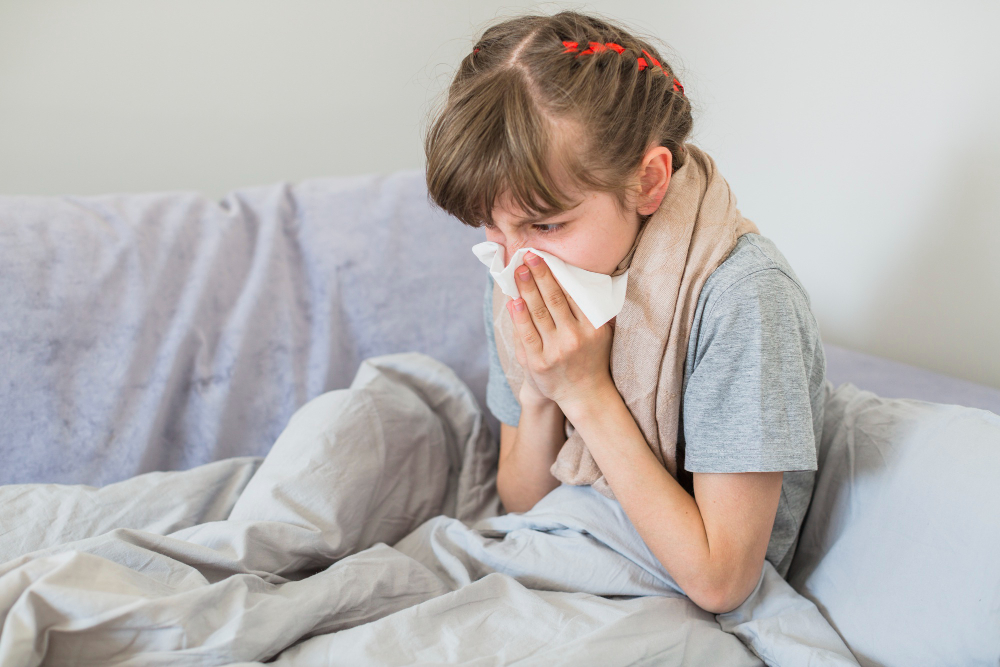
What is Flu in Children?
The flu in children is a common illness caused by the influenza virus. It spreads easily, especially during the colder months. Children can catch the flu at school, daycare, or even at home. Because their immune systems are still developing, kids can get sick quickly. Early care helps prevent serious problems. According to the CDC, children under five, especially those under two, are at higher risk for flu complications.
Common Symptoms
Flu symptoms in children can appear suddenly. While some signs are mild, others may be more severe. Knowing the symptoms helps parents act fast. Here are the most common childhood influenza symptoms:High fever or chillsCough and sore throatRunny or stuffy noseBody aches and headachesFatigue or feeling very tiredLoss of appetiteSometimes, vomiting or diarrhea (more common in children than adults)
Sometimes, symptoms can last for a week or longer. However, most children start to feel better within a few days.
Causes and Risk Factors
The flu in children is caused by influenza viruses. These viruses spread through droplets when someone coughs, sneezes, or talks. Kids can also catch the flu by touching surfaces with the virus and then touching their mouth, nose, or eyes. Several factors increase the risk:Being under five years oldAttending school or daycareHaving chronic health problems like asthmaWeakened immune systemNot getting the yearly flu vaccine
Because children are often in close contact with others, they can spread the flu quickly. For this reason, prevention is very important.
Diagnosis
Doctors diagnose flu in children by looking at symptoms and doing a physical exam. Sometimes, they may use a swab test from the nose or throat to confirm the virus. However, not all children need this test. If your child has a high fever, cough, and body aches during flu season, it is likely the flu. Early diagnosis helps guide the best treatment.
Treatment Options
Treating flu in children focuses on easing symptoms and preventing complications. Most children recover at home with rest and fluids. In some cases, doctors may prescribe antiviral medicines. These medicines work best if started within two days of symptoms. According to the CDC, antivirals can shorten the illness and lower the risk of serious problems. However, antibiotics do not help because the flu is caused by a virus, not bacteria.
Home Care and Lifestyle Tips
Home care plays a big role in helping your child recover from the flu. Here are some helpful tips:Encourage plenty of restOffer fluids like water, soup, or clear juicesUse a cool-mist humidifier to ease breathingGive fever-reducing medicine if needed (always follow your doctor’s advice)Keep your child home from school or daycare until they feel better
Additionally, watch for signs of dehydration, such as dry mouth or less urination. If you notice these, contact your doctor right away.
Prevention Strategies
Preventing flu in children is possible with a few simple steps. The most effective way is the yearly flu vaccine. The CDC recommends that everyone six months and older get vaccinated each year. Besides vaccination, you can help protect your child by:Teaching proper handwashing with soap and waterEncouraging your child to cover their mouth and nose when coughing or sneezingCleaning and disinfecting surfaces oftenKeeping your child away from sick peopleEnsuring your child eats healthy foods and gets enough sleep
In some areas, local health clinics offer free or low-cost flu shots for children. Check with your local health department for more information.
When to See a Doctor
Most children with the flu get better at home. However, you should call a doctor if your child:Has trouble breathing or fast breathingLooks very pale or blueIs not drinking enough fluidsHas a high fever that will not go downSeems very sleepy or hard to wake upHas a seizure
Sometimes, flu can lead to serious problems like pneumonia. Therefore, quick medical care is important if you notice any of these signs.
In summary, flu in children can be serious, but most kids recover well with proper care. For personalized advice, consult a pediatrician at Arogya Hospital if your child shows signs of the flu.